Friday, October 22, 2010

Yum Cha with a view


Hong Kong, arguably, has some of the best food in the world. It has, I believe, the best yum cha in the world, too, but finding the ultimate yum cha restaurant is a task harder than first thought. What I have found, though, is probably one of the better ones, with prices similar to what is being paid in Sydney (at places like Kam Fook and Marigold), but with much, much higher standards.  Not surprising, because yum cha is a popular breakfast, lunch and weekend brunch option, with at least 2 or more restaurants offering yum cha within the same shopping area--a lot of shopping centres, especially those along the MTR line, are interlinked. Competition is fierce, especially during non-peak periods (before 11am and after 2pm), and with frugal housewives and pensioners on the hunt for great deals, prices are kept low too, without too much sacrifice to quality. Come weekends, though, most families will look for quality--yum cha, in that sense, would be a family treat, and sometimes an opportunity to catch up with extended family and friends. With the economy on the rise, more and more people are now looking for higher quality, and willing to pay the premium for both food, service and ambience.


Cuisine Cuisine (國金軒), located at one of the most highly sought real estate in Hong Kong, the IFC at Central, meets this demand. With views of the Victoria Harbour, the chic interiors and smartly dressed waitstaff reflects the philosophy behind the food: traditional Cantonese food modified to suit the modern palate...and sometimes, the budget. Yum cha is no budget affair here: one of the regular dim sum offerings is abalone siu mai, where chunks of abalone is mixed in with the usual pork and shrimp filling, topped with a reconstituted, dried abalone the size of a fingernail. More regular fare is offered too, made to the same standard of excellence. 


 The seasonal menu


Once seated, tea is ordered and appetisers served. Also on the table are the chili oil and spicy soy, both house specialties. Dim sim is made to order, and a few moments is usually given before the waitstaff approaches again.

First to arrive is the steamed BBQ pork buns (叉燒包 Char siu bao). White, fluffy, and piping hot, each one is split into almost perfect halves. The buns are soft, light, and with just the right amount of chew, encasing a sweet-savoury filling of char siu that actually tastes of meat.

One of the modern reworkings of a yum cha classic is the steamed vegetarian rolls in tofu skins (蒸腐皮齋卷). Topped with a thickened shantang broth, it is light but packed with umami, the interplay of textures of the tofu skin, carrots, mushroom and shaved asparagus lettuce (萵筍) is a reflection of both skill and thought in this healthier version of the classic pan-fried vegetarian rolls that proliferate Sydney yum cha.
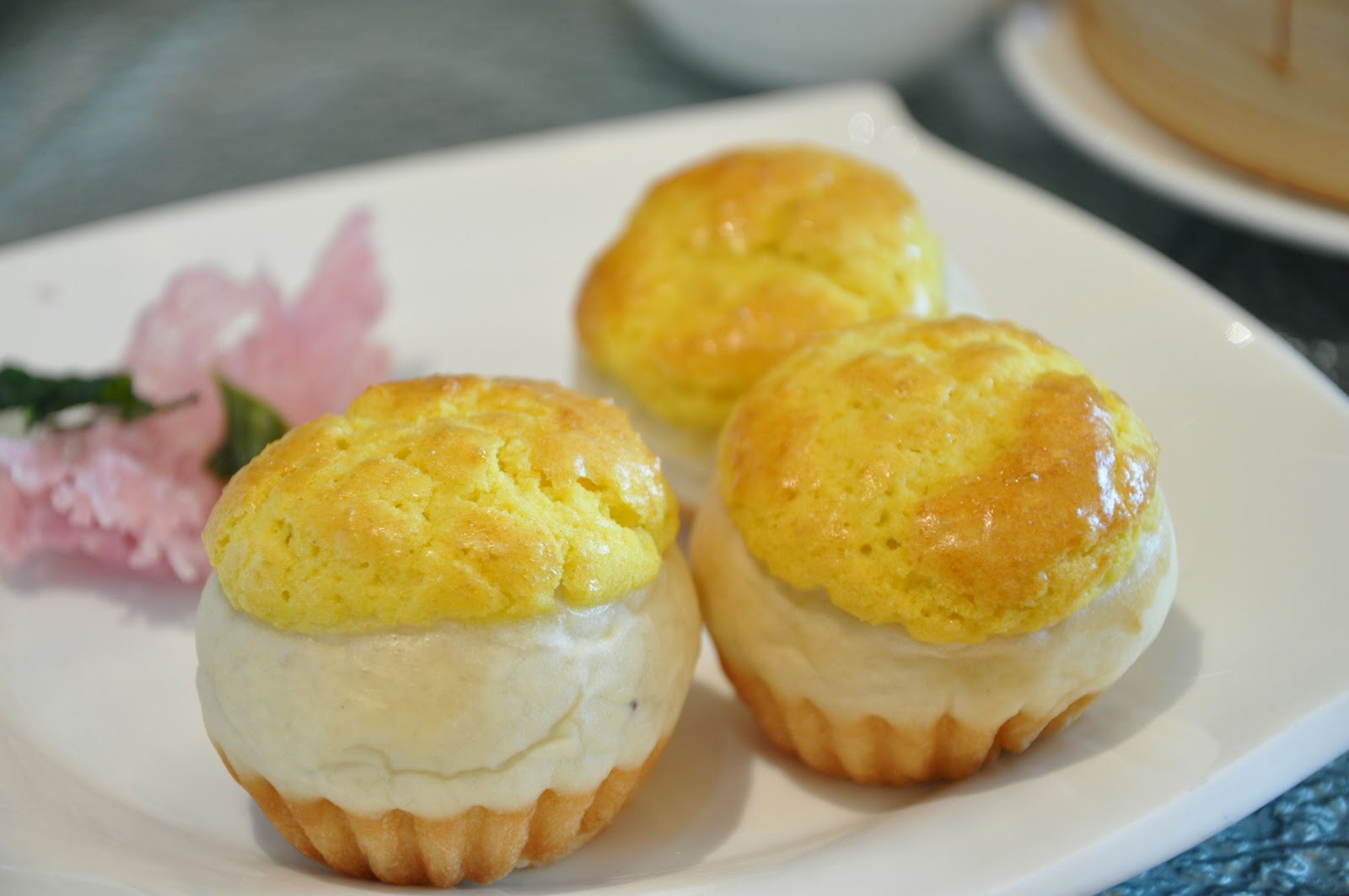

Mini char siu pineapple buns (迷你叉燒菠蘿包) is the fusion of the steamed BBQ bun with another Hong Kong favourite, the pineapple bun. The egg and sugar topping on the soft buns, cracked under the oven to resemble the exterior of a pineapple (hence the name) brings out not only the sweeetness of the char siu filling, but also the umami of the pork itself. It has become a favourite dim sim at yum cha, and the version at Cuisine Cuisine is one of the best in town.


Prawn dumplings (蝦餃 har gao) is a perennial favourite. Beneath the translucent skin lies a filling of fresh prawns and bamboo shoots, with the smallest amount of pork to bind it all together. The contrast of the chewy skin and the slight crunch of the filling is perfectly complemented with a small dab of the chili oil. A good prawn dumpling should have 18 pleats, the skin should not break when poked lightly with chopsticks, and offer a degree of resistance on chewing. This, I'd say, satisfies all three requirements.


Spring rolls (春捲) have been experiencing a renaissance in the dim sum world. Many newer restaurants now offer versions that are slender and long, rather than short and stumpy, with a filling of prawn paste that is, well, quite bouncy. Lightly fried, the skin is earthshatteringly crunchy and textural contrast with the prawn paste filling makes this one of the best reworkings I've tasted.


Siu mai (燒賣) is another yum cha classic. Hand minced pork and prawn is mixed in with chopped shiitake to make the filling, topped with roe before being steamed. Texturally, the filling is not as soft and dead as the ones made with machine minced meat, with small pockets of diced meat in the filling that actually lets you taste exactly what you are eating. As only the freshest meat is used, having not experienced the snap chill as Australian meat does, the pork and prawns exhibit extra umami from the freshness.


The stir-fried beef rice noodles with abalone sauce (鮑汁濕炒牛河) provides the carbs for the meal. I wouldn't say it is brilliant--the beef had too much bi-carb in the marinade (good quality beef shouldn't need any with a good chef). Nonetheless, it was still tasty, with the unconventional addition of compacted tofu skin which soaked up the abalone sauce.


Sure, similar, if not the same dishes can be found in Sydney for around the same price (25AUD per person). But the quality of food and service would be vastly different. And with the dollar nearing parity, it makes a lot of sense to save up for a trip to places like Hong Kong where the currency is pegged to the greenback, and splurge there instead.  

3101, Podium level 3,
IFC Mall, Hong Kong
Ph: +852 23933933

Bookings essential for yum cha.


Friday, September 17, 2010

Now this is crab

If you ever need proof of me being a massive procrastinator, well, here it is now. This is a long overdue post from July.

Coming from a family of rather spontaneous travellers (say, for example, our first trip ever to Kanto region of Japan was planned within 2 weeks, accommodation and flights confirmed a week before departure), we made the decision to go on a cruise about 2 days after it was suggested by a family friend. A 7 day cruise on the Diamond Princess, up the Alaskan Inner Passage from Vancouver to Anchorage. Unfortunately, I was the only one against the plan (what 20-something year old would want to be stuck on a ship for 7 days?) but given the overwhelming majority, I was overruled.

But I'm glad I went. And all because of this one dish. Or should I say, bucket.

Real Jumbo Alaskan King Crab.


After half a day on an el cheapo local tour (our pre-booked helicopter glacier excursion was cancelled due to heavy fog), we found ourselves rather cold and hungry (Alaska summer temperatures = Sydney winter climate). The Hangar on the Wharf Pub was suggested as a good local hangout for a beer and pub food, so that was where we found ourselves. Hearty food, awesome burgers, great local beers, at reasonable prices.  
Having had "crab legs" on the ship the night before, the Alaskan King crab legs on the menu at $65US for 4 legs (not including tips and taxes) seemed a bit too pricey. We were ready to grab the bill and go when we spotted another table being served the jumbo king crab legs.


The legs that were served on the ship the night before were tiny compared with the jumbo legs. That one leg had the same amount of meat I managed to scrape from my serving of about 2 dozen leg segments. The legs were so incredibly fresh, it didn't need much after being steamed.

With the legs were segments of fresh lemon, and, to our confusion, a tapas pot of melted butter. While the rest of the table went for the lemon (all being overly health conscious), I was the only one who went for the butter. Oh man, crab and butter ... it worked so well. The meat was actually quite delicate, so the acidity of the lemon juice actually was too harsh and didn't complement as well. The butter brought an extra dimension of richness and silkiness to the perfectly steamed meat, and heightened the sweetness and briny freshness of the crab even more. Mum had always said "whoever was the first to eat crab was a true food adventurer"; well, the consensus after the meal was "whoever came up with having crab with melted butter was a true food genius".


It was also the first time I had a dark beer. This is a local dark from the Alaskan Brewing Company, a rich, slightly bitter, nutty concoction that strangely had a Coke-ish aftertaste. It really cleansed the palate between each bite of crab, and brought out the nuttiness of the butter quite well.


To be honest, this was the best meal of the entire trip. Ship food was lackluster, other food on the land excursions weren't that memorable. As for the famed Alaskan salmon, it really is quite different to the salmon we get here in Australia. The King is a rich, fatty, delicately flavoured variety, and so probably better cold smoked, and the Sockeye much more robust and stronger in the salmon taste, and my preferred one for hot smoked. Unfortunately I forgot to take photos, but there really weren't any of the fresh fish at the time I visited, and not a lot of point taking photos of the pre-packed stuff.

Hopefully I'll be less of a procrastinator on my next trip, which is happening in less than 2 weeks!

The Hangar on the Wharf Pub
2 Marine Way #106
Juneau, Alaska
(907) 586 5018


Thursday, September 2, 2010

Healthy desserts?


It probably doesn't look like much, but this is one of the best winter dessert in my repertoire.

Sweet potato in brown sugar ginger tea.

Ginger, according to doctrines of Chinese medicine, warms up the body. Brown sugar helps with blood circulation, which in turn improves the flow of chi in the body. Sweet potato helps with reducing water retention in the body, and being high in fiber, helps also with digestion.

The ginger tea featured here is one I brought back from Taiwan. Sold in bags, it resembles nothing like the sugar we are familiar with in Australia. 


Sold in 5cm blocks, this is basically enough to make 2 large mugs of sweet ginger tea. The perfect balance of sugar, the spiciness of ginger, with the aroma of dried dates and longan (both improve circulation and warm the body), the perfect winter drink.

With all the rich and fatty food we tend to consume in winter, and general colder weather, this is a delicious way to restore a balance of health.

Sweet potato in brown sugar ginger tea
Serves 2-3
1 small sweet potato, cut into bite sized chunks
4 heaped tablespoons brown sugar (adjust to taste)
1 knob of old ginger, sliced thinly
3 dried red dates or 2 dried black dates
4 dried longan
1 litre water

1. Wash the sweet potato thoroughly, scrub the skin with steel wool to ensure most of the surface dirt has been removed. Cut into bite sized chunks, then place into a pot with the cold water, and set to the boil.
2. After the sweet potatoes have come to the boil, add the sugar, ginger, dates and longan, and simmer until the sweet potatoes are soft (10-20 minutes). Serve immediately.

Notes:
1. Dried red dates, dried black dates, and dried longan should be available from all good Asian grocers. You should be able to find them at the Chinese or Korean ones.
2. Old ginger should be used for this recipe rather than young ginger. Look for large knobs, golden skin, with wide stripes on the skin. Adjust the amount of ginger to your preference by adding the ginger little by little, keeping in mind the more you cook the ginger, the spicier the tea will become.
3. If you can find Okinawa brown sugar (沖縄黒糖) for cooking (and not as candy), that can be used as well. Otherwise, normal brown sugar from CSR is ok.

Saturday, August 21, 2010

Crackles!

It's Election Day. Have you cast your vote yet?

If Crackles was a political party and running in this election, there would have been no doubt at all which party I'd vote for. (Ok, so that was lame...)

Last week, a tweet by Pat Nourse caught my eye. "Today's best reason to leave the house: crisp-skinned slow-cooked kurobuta pork belly rolls at the Crackles stand at the Rozelle markets." The tweet, apparently, has since gone viral, though the virality has nothing to do with my actually going for a roll myself. I trust Pat Nourse and his tastebuds. A man who recommends Sang Kee cannot be wrong about crisp-skinned slow-cooked kurobuta pork belly rolls.

And the fact that they were set up at my nearest polling station was an extra incentive.

So we wandered there at 9:15, hoping to be overwhelmed by the smell of roasting pork. Maybe it was the wind, maybe it was something else, but it was really hard to smell anything at that end of the market. So we wandered around looking for the polling place (turns out there was a last minute change and we had to walk 2 blocks down), cast our votes, and came back. 9:45. We were about to give up and head down a block and grab something from Zumbo, when I saw one of the boys in chef's whites pulling out a roll.

Cue yygall, rushing over with arms full of newspaper, for one pork roll.


Pork!!!!

And there was a barbecue full of that!!!

I watched in awe with saliva dripping down my shirt as the pork was cut, pulled, and de-fatted. A sprinkling of Murray River Salt (it was pink!) over the meat, then everything was piled on top of a fresh bread roll stuffed with salad. When the crackling was cut...HOMG. I swear my heart fluttered.


Roll!!!!

The bread roll was crusty and crunchy on the outside, but really soft inside. Salad was crisp with a fantastically tangy dressing. But the pork! The pork was juicy, tender, and meltingly soft. And the crackling earthshatteringly crisp and fragrant. I totally understand why Pat Nourse said it was "the best reason to leave the house". I would leave the house for that every day.

Best Election Day breakfast ever.

PS: I think we may have ran into our local Liberal candidate as we came out of the market stuffing our faces into the pork rolls. Who cares about politics when there's good food to be had?

Much thanks to Crackles for allowing the photos. And not charging for them. Hehe.

Crackles
Saturdays: Rozelle Markets
9am-4pm

Sundays: Frenchs Forest Organic Food Markets
8:30am-1pm

Pork/Lamb rolls $8
Plate of pork $10
(Prices as of 21 August 2010, subject to change without notice)

Friday, August 13, 2010

Comfort Food


Congee.
As a child, I hated the bland, tasteless rice gruel that Mum made whenever I was sick. Gloopy, and always too hot, the thought of having congee alone made me determined to stay away from bugs as much as possible.
There is one type of congee I will never say no to, though. Sang Kee.
As a kid growing up, it was always a treat when we went out to Sang Kee for congee. Back then there was one tiny storefront, in the back streets of Sheung Wan in Hong Kong. This place was a favourite of my father, back when he was working in the vicinity in his early career in business. I'm not sure how often he went, but considering the current owner/proprietress still remembers him, I'd say it was pretty often.
A couple of years ago, they started expanding. First they merged with another nearby shop selling beef brisket in clear soup, and became Sang Kee Congee and Beef brisket noodle experts. Business was so good that they soon took over 2 more store fronts. Then it was the opening of the Kowloon branch near Yau Ma Tei station, and then a third store at North Point. I make an effort to go to Sang Kee at least once for the congee each time I go back to HK; a trip to HK is not complete without having a taste of my favourite congee.
For such humble beginnings, though, I can say they are world renowned. Regularly featured in guidebooks to Hong Kong (very prominently in Japanese one; and I recall seeing an entry in Lonely Planet also), Pat Nourse named it as one of the must-visit eateries of Hong Kong in the Gourmet Traveller. Chua Lam (avid Iron Chef viewers may recall that he is featured occasionally as a taster on the judging panel) is a regular visitor, and often writes about it in his magazine and newspaper columns. Speak to 10 Hong Kong gourmets, at least 9 of them will recommend it as a favourite, I reckon.
While they are famous for the fish bone, pork fry and fish ball congee, I've grown up with the beef congee, partly because I lack the patience and skill in eating segments of fish with large pieces of bone attached, and only just recently acquired a taste for fish balls in general. The beef is tender, packed with umami, and the congee scaldingly hot with the subtle sweetness of the pork bone, conpoy, bean curd and gingko seed soup base used to boil the aged jasmine rice coming through. The rice is cooked until it has almost completely disintegrated, forming a thick, soupy goodness that settles any stomach, and calms the mind.


The experience is not complete without a side order of fried dough sticks (you tiu). Soak a few pieces in the congee, the gaps become filled with the hot gruel, and becomes a fantastic vehicle of experiencing the ricey goodness, especially when sprinkled with a few drops of their special soy sauce.

Having been to both the Sheung Wan and Yau Ma Tei shopfronts, I still think it is best at its original location, the hole in the wall where it all started. The atmosphere is completely different: but that may be the memories talking. Taste wise, they are all the same. The head chef spends his day travelling to the three stores, to maintain their famed quality, so there should be no difference.


Sang Kee Congee and Noodles
Ground Floor, 9 Tung Fong Street (Opposite YMCA)
Yau Ma Tei
Yau Ma Tei MTR Station D exit